

New Vegas casino Plinko
Introduction
I look at Plinko a little differently from the way it is often presented on casino pages. On the surface, it seems almost too simple to deserve a serious breakdown: you choose a stake, set the risk level, drop a ball, and watch it bounce through a field of pegs until it lands in a multiplier slot. That simplicity is exactly why the format works. At New vegas casino, Plinko stands out not because it tries to imitate a slot, roulette, or crash game, but because it strips the gambling loop down to a very visible chain of cause, delay, and result.
For Australian players browsing fast-play casino games, that matters. Plinko gives immediate feedback, clear stakes, and a result that feels transparent even when it is still fully driven by randomness. You can see the ball move. You can follow the path. You can anticipate the landing zone. Yet the final outcome remains uncertain enough to create tension on every drop. That balance between visual clarity and real unpredictability is a big reason why New vegas casino Plinko attracts attention.
In this review, I will stay focused on the game itself: how Plinko works, what the risk settings actually change, how the pace feels in a real session, where the strongest points are, and where players should be careful before they start. If someone wants to know whether Plinko is worth trying at New vegas casino, the useful answer is not “yes, it is trending.” The useful answer is understanding what kind of experience the game really delivers.
What Plinko is and why it keeps drawing players in
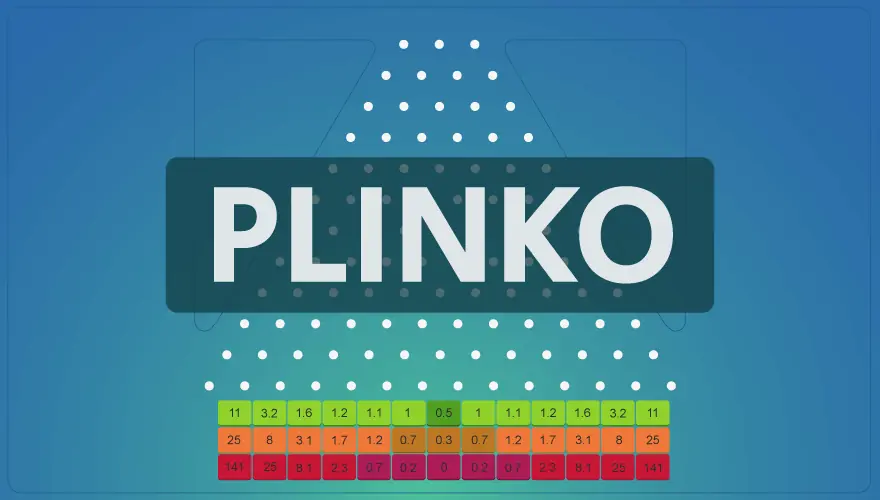
Plinko is a probability-driven casino game built around a vertical board filled with pins or pegs. A ball is released from the top, collides with those pegs on the way down, and eventually lands in one of several payout zones at the bottom. Each zone carries a multiplier. Lower multipliers usually sit near the centre, while the highest ones are placed at the far edges, where the ball reaches less often.
That basic structure is easy to understand within seconds. There are no paylines, no bonus overview rounds to memorise, no card values to learn, and no wheel sectors to track. For many players, especially those who prefer direct gameplay over layered slot features, this is a major advantage. The entry barrier is low, but the session can still become surprisingly intense once different risk profiles and board setups come into play.
One reason Plinko became so noticeable across modern gambling platforms is that it is highly watchable. It works well for solo play, but it also works visually in streams and social clips because every drop creates a small suspense arc. The result takes a moment to arrive. That tiny delay matters more than many people expect. In a slot spin, the animation often feels decorative. In Plinko, the animation is the event.
I would highlight one important observation here: Plinko looks calmer than it feels. The interface is usually clean and minimal, but the emotional swing between a cluster of low multipliers and one sudden high return can be sharp. That contrast is one of the format’s defining traits.
How the Plinko system works in practice
To understand New vegas casino Plinko properly, it helps to separate the visible action from the underlying logic. Visually, you are watching a ball bounce left and right off pegs. Mathematically, the game is distributing outcomes across a predefined set of multiplier positions, with the most common results concentrated around the middle and the rarest returns pushed toward the edges. Table game fans will get more out of this review after reading free chips details.
In most versions of Plinko, the player controls several core settings before each drop or sequence of drops:
- Bet size — the amount staked per ball.
- Risk level — usually low, medium, or high, affecting the payout distribution.
- Rows — in some versions, the number of rows changes the path length and multiplier map.
- Auto mode — for repeated drops at a chosen pace.
The ball’s movement appears physical, but for the player, what matters is the payout structure attached to the board configuration. A low-risk setup usually compresses the multiplier range. That means more frequent modest returns and fewer extreme outcomes. A high-risk setup stretches the board. The edge multipliers become much larger, but the common landings are more punishing and often sit at very low values.
This is where Plinko becomes more than a novelty. Changing the risk level does not merely “make the game harder.” It changes the entire feel of a session. On low risk, the experience can seem steady, almost deceptively controlled. On high risk, the same interface becomes much more volatile, with long dry sequences interrupted by occasional spikes.
| Setting | What it changes | What it means for the player |
|---|---|---|
| Low risk | Narrower multiplier spread | More frequent smaller returns, lower session shock |
| Medium risk | Balanced distribution | Mix of regular lower outcomes and occasional stronger hits |
| High risk | Wider multiplier spread, larger top prizes | More empty-feeling stretches, higher dependence on rare edge landings |
| More rows | Longer path and different board structure | Can increase suspense and alter how often extreme results appear |
Another practical point often overlooked: the ball path creates an impression of near-misses that can feel very personal. When a ball touches several pegs on the way toward a high multiplier and then falls back to the centre, it feels as though something was “almost won.” In reality, Plinko is not a skill-based timing game. That sense of almost getting there is part of the experience, not evidence that the player was close in a strategic sense.
Why the game feels engaging and how the session rhythm develops
The rhythm of Plinko is one of its strongest design features. Each round is brief, but not instant. There is enough travel time for anticipation to build, and not so much delay that the game becomes slow. That puts it in a very specific space between slots and crash-style formats. It is faster than most table games in terms of repeated action, but it gives more visual breathing room than a basic instant-result title.
In real play, the tempo depends heavily on how the player uses it. Manual dropping creates a more deliberate rhythm. You watch each result, react to it, and decide whether to continue or adjust settings. Auto-play speeds everything up and can turn Plinko into a rapid-cycle session where dozens of outcomes arrive in a short period. That is convenient, but it also reduces reflection time and can make bankroll swings feel more abrupt.
I think this is one of the most useful practical truths about the game: Plinko is simple to launch, but easy to accelerate beyond your comfort level. Because each drop is so easy to process, players may underestimate how quickly a sequence of stakes adds up, especially on high risk with auto mode enabled.
The interest also comes from contrast. Most drops do not produce dramatic results. That is precisely why the rare edge landing carries so much impact. The game creates attention by making ordinary outcomes common and exceptional outcomes visible. In a slot, a big moment is often wrapped in feature animations, sound layers, and bonus screens. In Plinko, a big moment is just a ball taking an unusual route to the edge. The presentation is stripped back, which can make the result feel oddly sharper.
How risky Plinko really is and who may enjoy it most
Plinko can be mild or harsh depending on the selected setup, but it should never be mistaken for a low-pressure format just because the interface looks clean. The central question is not whether the game is “safe” or “dangerous.” The real question is how much variance the player is deliberately choosing.
At lower risk levels, Plinko may suit players who want frequent outcomes and a more even session curve. That does not mean stable profit or reduced house edge in any magical sense. It simply means the distribution of results is less extreme. You are more likely to see many small returns than long empty runs followed by rare spikes.
At higher risk levels, the game becomes much more selective about where meaningful value comes from. A large share of the session may be carried by a very small number of standout hits. If those hits do not arrive, the bankroll can drain quickly. This is why high-risk Plinko appeals to players who actively enjoy swingy sessions and do not mind extended periods of modest or poor outcomes.
In my view, Plinko tends to fit these player profiles best:
- Players who like direct, visual randomness without learning complex rules.
- Players who want control over session tone through risk settings and bet size.
- Players comfortable with variance, especially if they choose medium or high risk.
It may be a weaker fit for players who prefer strategic decision-making, deep bonus structures, or long-form feature progression. If someone enjoys blackjack because choices matter, or prefers slots because bonus rounds build momentum over time, Plinko can feel too bare. Its appeal lies in concentrated suspense, not in layered development.
What to understand about probabilities, payout patterns, and expected outcomes
This is the section many players skip, and it is the one they usually should not. Plinko is built on uneven outcome frequency. The board is not designed so that every multiplier is equally likely. The centre is typically where the ball lands most often, because there are more possible paths leading there. The outer edges are harder to reach, which is why the largest multipliers are placed there.
That has several practical consequences:
First, seeing a very high multiplier on the board does not mean it is a realistic session expectation. It is a possibility, not a baseline. A board advertising a huge top multiplier is often also a board where many drops return little or nothing of note.
Second, short sessions can be misleading. A player may hit a strong edge multiplier early and conclude that the setup is generous, or suffer a dry run and decide the game is cold. Plinko outcomes can cluster in ways that create strong short-term impressions. Neither conclusion says much on its own.
Third, the game can create a false sense of pattern. Because the ball visibly moves through the board, players may start reading streaks into left-side or right-side landings. In practice, that visual path does not turn the format into a predictive system. The board invites interpretation, but it does not reward superstition. The full picture of payment methods lives in New Vegas Casino legality review for mobile bonus and cashier checks, including the less common ones.
One of the more memorable things about Plinko is this: it makes randomness look like a story. The ball appears to “decide” its route, and the eye naturally assigns meaning to each bounce. That is part of the entertainment value, but it is also where discipline matters most.
| Common player assumption | What is closer to reality |
|---|---|
| If the ball nearly reached the edge, I was close to a big result in a meaningful way | The visual near-miss increases tension, but does not imply future advantage |
| High top multipliers make the setup more rewarding overall | They usually come with a harsher distribution and less forgiving average session flow |
| Several central landings in a row mean an edge hit is due | Outcome clustering happens, but it does not create a guaranteed correction |
| Plinko is easier to read than slots because I can see the ball move | The result feels transparent, yet the underlying uncertainty remains substantial |
For players in Australia trying Newvegas casino Plinko for the first time, the practical takeaway is straightforward: choose settings based on bankroll tolerance, not on the size of the most eye-catching multiplier on the screen.
How Plinko differs from slots and other casino favourites
Plinko is often grouped loosely with slots because it is fast, simple, and multiplier-driven. That comparison is understandable, but it misses some important differences. A slot is usually built around reels, symbol combinations, feature triggers, and bonus events that interrupt the base rhythm. Plinko does not work that way. It has no reel narrative, no expanding symbol logic, and usually no feature ladder that changes the state of play over time.
The result is a cleaner but narrower experience. In a slot, part of the appeal is progression: best New Vegas Casino free spins page for Australian players may trigger, modifiers may stack, and the session can shift into different modes. In Plinko, the tension is concentrated into repeated single events. Every drop begins and ends quickly. The structure resets immediately.
Compared with roulette, Plinko offers a more animated and tactile form of chance. Compared with crash games, it is less about deciding when to cash out and more about accepting a predefined distribution. Compared with dice-based instant games, it is more visual and emotionally legible. That combination explains why many players treat it as a bridge between pure instant-play formats and more theatrical casino content.
From my perspective, the biggest difference is psychological. Slots often hide their math behind symbols and features. Plinko puts the distribution in plain sight. You can literally see where the low and high multipliers sit. That does not make it more beatable. It makes it easier to understand what kind of trade-off you are accepting.
Where Plinko performs well and where it shows its limits
Plinko has clear strengths, but they are specific strengths. It is not a universal replacement for other casino formats, and that is worth stating plainly.
Its strongest point is accessibility. A new player can understand the objective almost instantly. The second major advantage is pacing. The game delivers suspense without requiring long setup time or complicated reading. The third is customisation of session feel: risk level and board settings can materially change how aggressive or measured the experience becomes.
There is also a transparency benefit. Even though the result is still random, the player can grasp the structure faster than in many slots. You know where the premium multipliers are. You understand that the centre is safer but less exciting. That clarity helps players make more informed choices.
Still, the game has limitations. It can become repetitive if a player needs evolving features or strategic interaction. It can also create bankroll pressure through speed, especially when repeated drops are running automatically. And while the interface looks simple, high-risk configurations can be much harsher in practice than a casual first impression suggests.
I would summarise the balance like this:
- Strong side: easy to understand, visually satisfying, adjustable session style, fast suspense.
- Weaker side: limited depth, no long-form progression, can feel swingy or repetitive depending on settings and expectations.
That is not a flaw in design so much as a matter of fit. Plinko knows what it is. Problems usually appear when players expect it to behave like a slot with extra transparency or like a low-intensity casual game. It is neither of those things exactly.
What to check before starting a session at New vegas casino
Before launching Plinko at New vegas casino, I would recommend focusing on a few practical points rather than jumping straight into repeated drops.
- Check the risk setting first. This is the most important choice because it changes the session profile more than many new players realise.
- Match stake size to session speed. A small-looking bet can add up quickly if you are dropping balls in rapid succession.
- Look at the multiplier map carefully. The biggest number on the board is not the whole story; the spacing of the lower outcomes matters more for session feel.
- Use demo mode if available. Not to “solve” the game, but to understand how different configurations behave emotionally and financially.
- Decide whether you want manual or auto play. Manual mode gives more breathing room. Auto mode increases convenience but can reduce awareness of spend rate.
If I had to reduce all of that to one practical rule, it would be this: do not judge Plinko by its interface alone. The board looks friendly. The actual experience can range from smooth and controlled to sharp and punishing depending on the setup. That gap between appearance and session reality is one of the defining features of the format.
Final verdict on New vegas casino Plinko
New vegas casino Plinko offers a very specific kind of gambling experience: fast, visually clear, and built around repeated moments of suspense rather than layered bonus design. Its appeal comes from the contrast between a simple surface and a session that can feel very different depending on the chosen risk level. Low-risk play can seem measured and steady. High-risk play can become abrupt, tense, and heavily dependent on rare standout landings.
What the game does best is clarity. It shows the player the board, the multipliers, and the trade-off between common results and rare premium outcomes. That makes it easier to understand than many slots, even though it remains fully random. It also gives players more direct control over the tone of a session than a fixed-format reel game often does.
Its strongest qualities are speed, accessibility, and visual tension. Its weak points are limited depth, potential repetition, and the ease with which fast play can magnify bankroll swings. That is where caution matters. Plinko is not complicated, but it is not harmlessly casual either. The cleaner the interface, the easier it is to forget how much variance can be sitting underneath it. If bonuses are what you care about, New Vegas Casino Gates of Olympus slot details for players checking risk and value breaks down every offer currently running.
For players who enjoy direct probability-based play and want a format that is easy to grasp but still capable of real tension, Plinko can be a strong fit at New vegas casino. For players who want strategy, evolving features, or slower decision-led sessions, another format may be more satisfying. In other words, Plinko is worth trying not because it is fashionable, but because it delivers a distinct style of play that is honest about what it is: a simple-looking drop game with a surprisingly wide emotional range.
FAQ
How does Plinko work on the New Vegas games lobby?
A ball is released from the top and drops through pegs before landing in a scoring section. Each landing position determines the multiplier for that round.
What should be checked before dropping the first ball in real-money play?
Confirm the stake amount and the selected mode, then review the round rules shown on the game panel. If a bonus balance is displayed, make sure the game is using the intended funds for the round.
Where can the ball-drop controls be found during Plinko rounds?
The controls are on the Plinko game panel next to the bet and multiplier display. Look for the button to launch the ball and any settings that affect risk or round behavior, such as bet selection.
How do multipliers work after the ball lands?
The multiplier is tied to the scoring section where the ball lands. If the section shows no win multiplier, the round ends with a loss based on the stake.
What does volatility or risk level mean in Plinko?
Volatility describes how often the game produces smaller results versus bigger swings. Higher risk levels typically show wider payout variation, while lower risk aims for more frequent, steadier outcomes.
How does a promo code or bonus balance affect Plinko results?
If a bonus balance is active, Plinko rounds may use it instead of the regular casino balance. Wagering and other bonus terms can apply, so the game panel should reflect which funds are being used.
What are the main round limits and stake constraints to expect in Plinko?
Plinko typically enforces minimum and maximum stake per round. Limits can also vary based on the chosen risk setting and the current account status.
Is live casino available in the same place as Plinko, or is it separate?
Plinko is a fast online casino game in the game lobby, so it sits alongside other instant-play options. Live casino tables with live dealers are handled in a separate lobby area and run under different interfaces.